30 Daffodil Pattern Backgrounds: A Springtime Asset for Designers
The Whimsical Charm of Hand-Drawn Botanicals
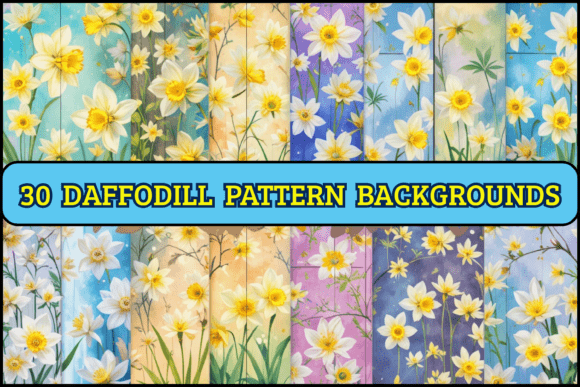
There’s a particular quality to a daffodil that feels instantly uplifting. It’s not just the cheerful yellow, but the way the petals unfurl—a mix of structure and gentle wildness. This collection of 30 Daffodil Pattern Backgrounds captures that feeling precisely. These aren’t stiff, overly formal botanical illustrations. Instead, they feature hand-drawn daffodil motifs with a playful, slightly imperfect line quality that gives them genuine personality. The illustrations are paired with soft, pastel accents—think blush pinks, gentle lavenders, and creamy whites—that complement the yellow without overwhelming it. The overall aesthetic is one of joyful elegance, a modern twist on a classic spring flower.
What makes these patterns particularly useful is their seamless repeat format. Each design tiles flawlessly, allowing you to scale them for projects large and small without worrying about awkward seams or breaks in the flow. The backgrounds themselves vary from clean, solid tones to lightly textured surfaces, adding depth and versatility. This means one pattern might have a crisp, white background perfect for a minimalist stationery design, while another features a subtle linen texture that adds warmth to a digital wallpaper. This range ensures you’re not just getting 30 patterns, but 30 distinct moods and applications.
Practical Applications: From Digital Screens to Physical Goods
The true value of a design asset lies in its flexibility. These 30 Daffodil Pattern Backgrounds are built for a wide spectrum of real-world projects. For digital creators, they’re a ready-made solution for website backgrounds, blog headers, and social media graphics. The patterns are lively enough to catch the eye in a crowded feed but balanced enough not to distract from your core message or typography. They work exceptionally well as a background for a display font in a hero section, creating an immediate sense of seasonal freshness for a brand’s online presence.
For entrepreneurs and marketers, the applications extend into branding and packaging. Imagine these patterns on product packaging for a spring collection, on the sleeve of a coffee bag, or as the background for a small business’s loyalty card. The whimsical, approachable style can soften a brand’s identity, making it feel more friendly and connected to nature. This is where a creative font asset directly influences brand perception. Paired with a clean sans serif font for body text, the daffodil pattern can communicate a brand that is both professional and warmly human.
For crafters, hobbyists, and publishers, the physical applications are just as compelling. These high-resolution patterns are ideal for scrapbooking, fabric printing for quilts or apparel, and stationery design. Think of greeting cards, journal covers, or even the interior endpapers of a self-published book. The seamless nature means you can print yardage of fabric or large sheets of wrapping paper with confidence. The patterns are designed to be commercial fonts of sorts—a complete toolkit for creating products that feel cohesive and professionally designed, even if you’re working from a home studio.
Integrating the Patterns into Your Design Workflow
Adopting a new set of design assets requires a bit of strategy. Here’s how to think about using these daffodil patterns effectively:
- Evaluate the Project’s Tone: Before you dive in, ask yourself if the project’s personality aligns with the pattern’s whimsical, natural charm. It’s a perfect fit for lifestyle brands, wellness blogs, children’s products, spring marketing campaigns, and any project that benefits from a touch of organic beauty. It might be less suitable for ultra-corporate, minimalist, or gritty industrial aesthetics.
- Master the Art of Pairing: The pattern is a star, but it needs supporting cast. For typography, pair it with typefaces that offer contrast and clarity. A sturdy serif font can add a touch of classic sophistication, while a geometric sans serif font keeps things modern and clean. Avoid overly ornate script fonts that might compete with the hand-drawn lines of the daffodils. Let the pattern be the background, and your font pairing be the clear, readable voice.
- Consider Scale and Context: A pattern that looks lovely as a full-page background might feel overwhelming as a small accent. Test the pattern at different scales. Often, reducing the opacity or using a cropped section of the pattern as a sidebar or footer element can be more effective than using it at full intensity. This is key to maintaining visual hierarchy and readability.
- Leverage the Color Palette: Don’t just use the pattern as-is. Sample colors from the daffodils or the background tones to create a cohesive palette for your entire project. This ensures your buttons, headlines, and other graphic elements feel intentionally connected to the background, strengthening overall brand identity and design consistency.
Ultimately, these 30 Daffodil Pattern Backgrounds are more than just pretty pictures. They are a versatile design asset that can save you time, spark creativity, and elevate the professionalism of your work. They offer a shortcut to creating a fresh, engaging, and seasonally relevant aesthetic across a multitude of mediums. By understanding their strengths and applying them thoughtfully, you can bring a genuine breath of springtime charm to your next project, whether it’s a digital ad, a product label, or a personal piece of art.