Unlocking Creative Depth with Purple Watercolor Seamless Backgrounds
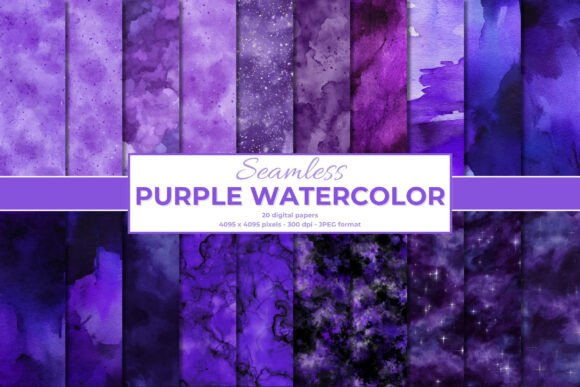
There’s a distinct mood that purple brings to a project—it’s a color that sits at the intersection of calm and creative energy. When you translate that into a textured, organic medium like watercolor, the result is something that feels both artistic and versatile. The Purple Watercolor Seamless Digital Paper Bundle isn’t just a set of colored backgrounds; it’s a toolkit for establishing atmosphere. With 20 distinct designs, you’re working with a range that moves from the soft, whispery edges of lavender washes to the bold, rich saturation of deep amethyst and plum. These aren’t flat, digital-looking colors. They have the organic irregularity of watercolor pigment—soft bleeds, subtle granulation, and fluid transitions that give them a hand-painted quality.
This collection is built around seamless tiles, which is a practical detail that changes how you can use them. A seamless background means you can repeat it indefinitely in any direction without visible seams or awkward breaks. For a designer, this is fundamental. It means you can scale a pattern for a large-format print, use it as a repeating fill in a digital planner, or apply it as a full-bleed background on a social media template without worrying about awkward edges. The 4095x4095 pixel dimension at 300 DPI gives you serious flexibility. That’s a high-resolution file that can handle detailed work, from sublimation printing on fabric or mugs to crisp, professional print invitations. You’re not working with a small, pixelated texture that falls apart under scrutiny.
Where Purple Watercolor Backgrounds Truly Shine
Think about projects where mood and texture are part of the message. For wedding invitations or event stationery, a soft lavender watercolor background instantly communicates elegance and a personal, artistic touch. It pairs beautifully with clean, modern typography—a simple sans serif font for details and a flowing script font for names creates a balanced, sophisticated hierarchy. The background sets the stage without competing with the essential information.
In the world of digital design, these backgrounds are incredibly useful. If you’re a content creator or a small business owner building a brand on social media, a consistent visual theme is key. Using a purple watercolor texture as the base for your Instagram posts, story highlights, or Pinterest graphics can create a cohesive, recognizable aesthetic. It’s a way to stand out in a crowded feed. The texture adds depth and interest that a flat color can’t, making your graphics feel more premium and crafted. It’s also perfect for designing digital products like planners, journal pages, or e-book covers. The seamless nature allows you to create layouts that feel expansive and professionally designed, even if you’re working from a template.
For entrepreneurs and marketers, the application extends to brand identity and packaging. Imagine a skincare brand or a boutique bakery using a subtle plum watercolor texture on their product labels or box inserts. It communicates a sense of artisanal quality, creativity, and attention to detail. This kind of design asset helps build a brand perception that feels both professional and personal. It’s a visual shortcut to telling customers that you care about the finer points. Even for internal documents—like a beautiful presentation deck or a company newsletter—a thoughtful background can elevate the entire experience, making information more engaging and memorable.
Integrating Texture into Your Design Workflow
When you bring a resource like the Purple Watercolor Seamless Backgrounds into your workflow, the first step is to think about contrast and legibility. A vibrant, textured background is beautiful, but your primary content—text, logos, key graphics—needs to remain clear and easy to read. This is where font choice and color pairing become critical. If you’re using a deep, rich plum background, pair it with light-colored text. A crisp white or a soft cream works well. For a very light lavender wash, you could use a darker gray or even a deep purple for contrast.
Font pairing with textured backgrounds follows some practical rules. Avoid overly complex or heavily detailed script fonts for body text; they can get lost in the texture. Instead, use them sparingly for headlines or accents. A clean, geometric sans serif font for paragraphs will maintain readability. A classic serif font can add a touch of formality and elegance. The key is to create a clear visual hierarchy. The background is your foundation—it sets the tone. Your typography is the structure that delivers the message. They should work together, not fight for attention.
Before committing to a background for a large project, test it. Place your actual text and design elements over it. See how it looks at the intended size. Check the seamless tiling—does the pattern repeat in a way that feels natural, or does it create an obvious grid? The quality of these files is designed to avoid that, but it’s always good practice. Consider the final output. For digital screens, the color will be vibrant. For print, especially on different paper stocks, colors can shift slightly. A test print on your intended material is always a wise step, particularly for commercial projects like product packaging or high-end stationery.
This bundle is more than just a collection of pretty pictures. It’s a set of practical, high-quality design assets. The consistency in style across the 20 papers means you can mix and match within a project without clashing. You might use a galaxy-inspired texture for a cover page and a softer cloud texture for internal pages, maintaining a cohesive purple theme while adding visual variety. For anyone working in creative fields—whether you’re a graphic designer, a blogger, an Etsy seller, or a marketing professional—having a library of such versatile, ready-to-use textures is a genuine asset. It streamlines the design process, sparks new ideas, and helps you produce work that has a polished, professional, and distinctly artistic feel.